


Are you looking for experts capable of effectively steering the modernization of your production, inventory management, and shipping processes? You would be right to do so. Faced with the increasing complexity of supply chain management (ERP, WMS, TMS, order management, etc.) and new requirements for flow tracking and delivery, all organizations must rethink their IT architectures. As a consulting firm specializing in digital transformation, we support the largest retail players in France, from Saint-Gobain to e-commerce leaders. Our team of senior consultants and IT supply chain project managers intervenes in the definition and implementation of IT master plans, enabling the optimization of supply chain management. From the initial diagnosis to operational implementation, our experts guide you through the innovation of your information systems with a clear objective: creating measurable value for your organization.
Strategic Plan for Supply Chain and Operations: Transformation Roadmap
In the face of financial, health, and geopolitical crises, companies must demonstrate increased agility in their Supply Chain and Operations functions. With a constantly evolving environment, it is crucial to know how to transform the Supply Chain and operations to make them strategic within your organization. This strategic thinking covers several essential dimensions: organization, business processes, information system architecture, change management, and business cases.
Althéa guides you in defining your objectives by answering the following questions:
- What are the challenges for Supply Chain and Operations? Identify the challenges to be addressed to turn your function into a strategic partner.
- Which levers should be activated as a priority?
- Organization: Should activities be centralized or decentralized? Opt for new upstream and downstream flows? Prefer specialized or versatile employees?
- Processes: Fully harmonize or adapt to local specificities? How to effectively digitize processes in an international context?
- Tools: APS, WMS, TMS, ERP, CAM, MES, CMMS, CRM… How to ensure system interoperability and data management?
- Architecture: Integrated, hybrid, or best-of-breed? What are the contributions of AI, RPA, or Machine Learning in a Supply Chain and Operations IS?
- How do you compare with the competition? Analyze your operational practices and performance in comparison with those of other companies with similar challenges.
- How can you manage digitalization challenges? Develop an agile Supply Chain and Operations IS capable of evolving without disruption.
- How can you prioritize developments? Secure and implement change quickly.
Need to optimize your supply chain?
We support the definition and implementation of effective IT master plans.
Our methodology: key stages of support
- Scoping the Approach: Understand the context, meet decision-makers, and map Supply Chain and Operations challenges to initiate the reflection.
- Current-State Assessment: Analyze the organization, processes, tools, skills, and governance. Identify strengths, evaluate costs, and find optimization levers.
- Defining the Roadmap: Develop possible scenarios, analyze strengths and weaknesses, and establish a business case.
- IT Architecture: Design a coherent architecture with a data-centric approach and ensure the interoperability of different systems.
- Decision support: Select the target scenario, detail the operational and financial roadmap, and prepare for deployment.
The Supply Chain and Operations/Operations IT master plan is an essential tool for defining the scope of your transformation, optimizing development priorities, and reducing potential obstacles. For an in-depth consultation and tailored support, contact Althéa today.
Key Figures
Master Plans
completed each year for our clients
of scoping assignments carried out
help identify projects with a fast, positive ROI
of transformation projects
include an international dimension
References

For a French leader in industrial works and maintenance
Industrial works sector – €1.5B revenue | 13,000 employees

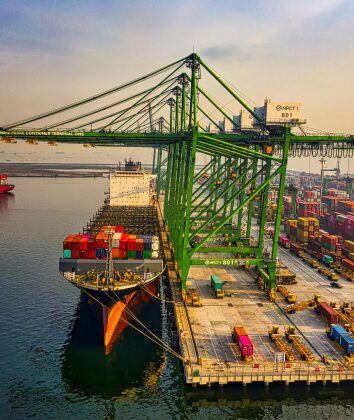
As part of a complex industrial project involving atypical logistical flows, we had to design the processes to be equipped and account for traceability adapted to the technical operations for which the logistics department would be responsible. There is a significant amount of information to be collected from various stakeholders throughout the operational chain, with information sharing to be maintained until delivery to the final customer. Several logistics sites based in France are involved with different processing roles, up to the various shipping modes to be organized. We developed a Master Plan for flows and business activities to be covered before recommending IT solutions capable of meeting the logistical traceability requirements.
Mission date: from November 2022 to January 2023
Team: 1 Senior Manager, 1 Logistics Flow Expert

For a major river transport player in Europe
Transport sector – €320M revenue | 1,200 employees
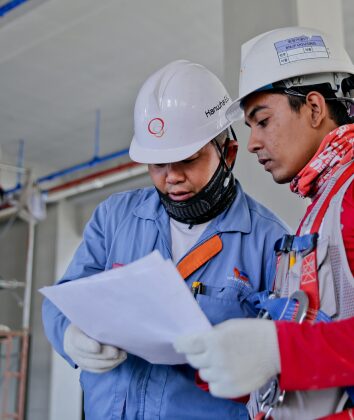
In a reflection on transforming its IS, the group requested a pre-study to evaluate scenarios and impacts in the event of a modification to its application architecture and functional coverage for support activities (Finance and Procurement) and business activities (River, Maritime, Multimodal, and Industrial Services). Althéa was mandated to work on a 3 to 5-year trajectory for the evolution of more than 50 applications. We established a vision by business line and for the group as a whole to consolidate an IT Master Plan describing the target and the transformation stages to be achieved. Since then, we have continued our support for this client in the transformation of various IT projects.
Mission date: from September 2018 to December 2018
Team: 2 Managers
For a French company specialized in manufacturing building and insulation materials
Building materials sector – €240M revenue | 900 employees
Our client wished to be supported in its project to overhaul its global IS to better align with the group’s ambitions. In a context of accelerating activities and a desire for international development, a master plan was consolidated across all sovereign activities (Finance, Procurement, Supply Chain, and Operations) of the group to set the roadmap for IS evolutions over a 2 to 4-year trajectory.
Challenges
Design an Agile Roadmap
in order to remain adaptable to an evolving environment and implement a quick-wins strategy to make the transformation concrete and visible quickly.
Build a Collaborative Transformation Plan
supported by all stakeholders, ensuring buy-in and anticipating and securing change management.
Put Value Analysis at the Core
brought by the transformation at the center of the approach and ensuring its long-term management.
Contacts


IT supply chain: frequently asked questions
How can interoperability be ensured between the different IT systems in the supply chain?
System interoperability is a major challenge for effective supply chain management.
The implementation of a service-oriented architecture (SOA) ensures communication between different software such as the transport management system, the WMS, and the ERP.
Standardized APIs play a key role in integrating real-time data flows. Meanwhile, the implementation of a centralized data management hub facilitates the processing and synchronization of information between applications.
It is the responsibility of the IT supply chain consultant to pay particular attention to exchange formats and communication protocols.
How can the transition from legacy systems to new systems be managed?
Migrating existing systems to new IT supply chain solutions requires rigorous planning to maintain business continuity. The IT project manager must establish a progressive transition strategy, often based on a hybrid approach where both systems run in parallel. A pilot usually allows for testing critical processes before full deployment.
In any case, data quality must be validated at each stage of the migration.
How can supply chain data quality be guaranteed?
As you know, data reliability is fundamental for optimizing flow management and decision-making. Collaboration with suppliers and external partners is crucial for maintaining consistent data. Beyond that, implementing data governance involves automated controls, validation processes, and full traceability. The use of big data analytics helps identify anomalies and improve forecast accuracy.
The supply chain manager must establish specific KPIs to measure data quality at every level of the logistics chain.
What budget should be planned for an IT supply chain project?
The budget estimate for an IT supply chain project must take into account multiple direct factors (software licenses, etc.) and indirect factors (human resources, user training, etc.). The budget varies according to the complexity of the project: a TMS can cost from €100K to several million for a large group. Integration with existing systems like SAP often represents 30% of the total budget. Maintenance and future evolution costs must also be planned for.
Which monitoring tools should be used in IT supply chain?
Monitoring IT supply chain systems requires a combination of complementary tools.
- Technical supervision solutions monitor application performance and data flow status in real time.
- Customized dashboards allow teams to track critical indicators: service availability, order processing times, and EDI exchange quality.
- Predictive analytics helps anticipate potential problems in the supply chain.
- Business Intelligence tools like Tableau or Power BI facilitate the visualization of trends and the detection of anomalies in procurement and distribution. Automated alerts ensure optimal responsiveness in the event of incidents.