



Migrating to S/4HANA is more than just a technical update or a simple ERP modernization. This project represents a profound transformation of processes, roles, and business practices, the success of which depends as much on the quality of the solution as on how teams are brought on board. In this context, the SAP Core Model becomes a central pillar, both functional and human: it structures processes, but it must also serve as the basis for a clear, progressive, and readable change management strategy for users.
The Core Model as the foundation of transformation
The Core Model is not just a functional repository: it is a standardized process model that defines key flows (finance, supply chain, HR, sales, etc.) in their SAP “best practice” version. It imposes a certain uniformity, which can generate tension with local or historical specificities. This is precisely the role of change management: to transform this standardization into an opportunity rather than a constraint.
The approach consists of making the Core Model a pedagogical and operational lever. From the design phase, change management teams work in close collaboration with SAP architects and business referents to:
- Identify gaps between the Core Model and current practices,
- Define processes to be “kept,” “adapted,” and “abandoned,”
- Build concrete usage scenarios, illustrated by real user journeys.
This co-construction phase gives meaning to the Core Model for teams: it is no longer perceived as a black box imposed by SAP, but as a shared framework that simplifies rules, reduces complexity, and facilitates system maintenance.
Getting teams on board with the Core Model
For the Core Model to be adopted, it is essential to move the project beyond the technical sphere and link it to the users’ daily lives. The first step consists of finely mapping user communities: business lines, profiles, levels of digitalization, and current pain points. This mapping makes it possible to understand what the transition to S/4HANA and the Core Model changes concretely for everyone: what disappears, what evolves, and what becomes simpler.
A progressive engagement plan is then structured:
- Co-construction workshops with business referents to define usage scenarios,
- Demonstrations to show the new user journey before going live,
- Iterative feedback sessions to adjust ergonomics and processes upstream.
The goal is to turn end-users into change ambassadors, capable of relaying the Core Model logic to their teams and reducing resistance. The Core Model then becomes a common language between management, business lines, and IT teams, facilitating communication and alignment.
Keys to success for sustainable adoption
SAP S/4HANA projects that succeed in creating a dynamic of buy-in share several principles frequently observed in the field.
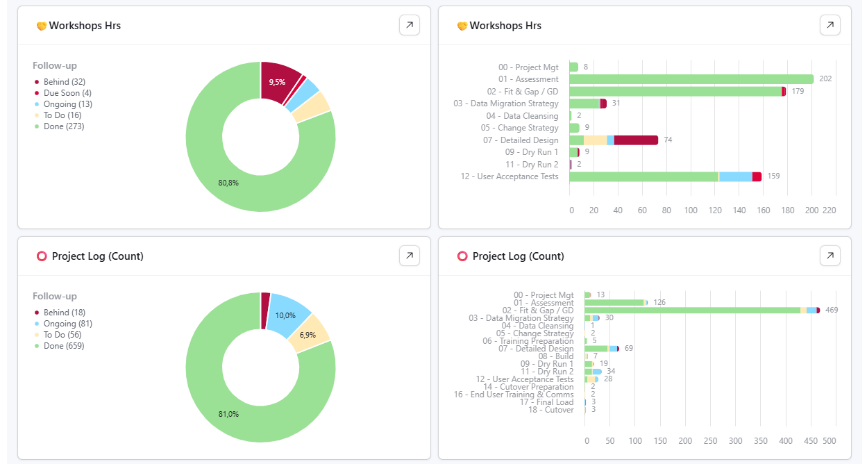
Involving the right business stakeholders from the design phase
The issue is not the number of participants, but their legitimacy and their ability to understand impacts and drive decisions.
Clarifying the SAP framework from the start
Making the room for maneuver between standard, possible adaptations, and non-negotiables visible secures trade-offs and limits misunderstandings.
Starting from future uses rather than theoretical processes
Projecting into user journeys, via concrete scenarios, allows teams to visualize their future daily lives long before deployment.
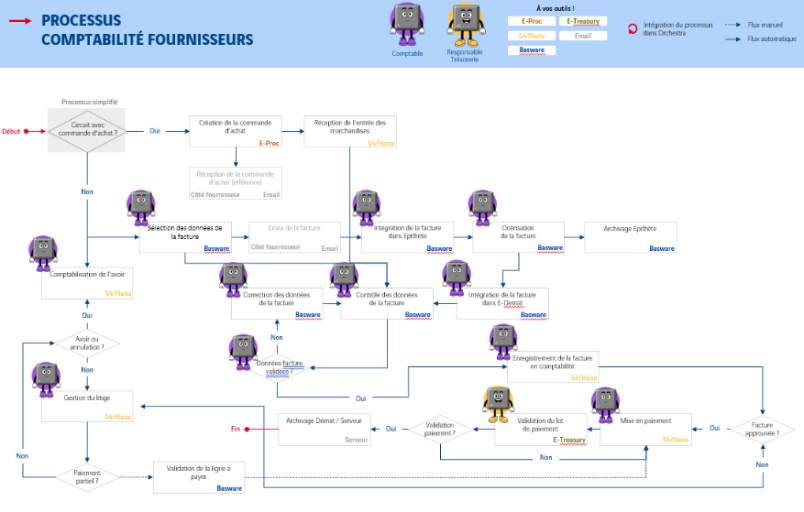
Making impacts visible by group
Identifying what changes for each group allows for the anticipation of efforts, rather than discovering them too late.
Defining a change management strategy aligned with the Core Model
The change management strategy is integrated from the design phase and relies on a structured framework (ADKAR, Kotter model, etc.), adapted to the S/4HANA context and the Core Model. It is built around three major levers:
- Targeted communication: simple, concrete messages adapted to each audience (management, managers, operational users), with clear storytelling on the “why” of the Core Model and its business benefits.
- Tailored training: differentiated paths (beginners, experts, super-users), hybrid formats (e-learning, practical workshops, simulations), and skill validation systems. The Core Model serves as a common thread for training, with modules built around standardized key processes, while integrating local specificities into dedicated appendices or paths.
- Daily support: presence of change referents in the field, reference materials, and active “post-go-live” support to secure adoption and quickly correct friction points.
This strategy is managed via change indicators (participation rates, skill levels, user feedback, adoption KPIs), which allow the plan to be adjusted in real time.
An innovative approach centered on user experience
What distinguishes S/4HANA support is the way user experience is thought of as a performance lever. Change is not limited to training and communication; innovative methods are integrated:
- Design thinking to co-create user journeys with business lines,
- Gamification to make learning more engaging (quizzes, challenges, badges),
- Data-driven change to measure adoption via the actual use of S/4HANA modules and adjust actions accordingly.
Emphasis is also placed on reducing the cognitive load associated with the transition: simplified interfaces, contextual guides, short videos, and live FAQs. The goal is for the transition to S/4HANA to be perceived as an improvement in the work experience, rather than an additional technical constraint.
In summary: S/4HANA, a human transformation project
Migrating to S/4HANA means successfully evolving systems, processes, and behaviors at the same time. Expertise in change management consists of transforming this complexity into a structured, readable, and reassuring approach for teams.
Users are brought on board from the beginning, a change strategy aligned with the SAP project and the Core Model is built, and innovative formats and tools are deployed to maximize adoption.
Ultimately, S/4HANA does not just become a new ERP: it becomes a performance lever, driven by engaged teams, supported and aligned on a shared Core Model.