


Successive crises and geopolitical instability are forcing companies to adapt their Finance function to remain agile. How can the Finance function become a strategic partner within the organization? This question relates to organization, business processes, information system architecture, change management, and business cases.
Finance Master Plan/Finance IS: transformation roadmap
Althéa supports you in this strategic thinking by addressing key questions:
- What challenges should the Finance function address?
- Which levers should be activated as a priority?
- Organization: should you opt for shared service centers or local teams? Do you need specialists or generalists?
- Processes: should processes be fully standardized or adapted to local specificities, especially in an international context? How can digitalization be used to optimize these processes?
- Tools: which tools should be selected (ERP, EPM, P2P) and how can interoperability be ensured? Who owns the data?
- Architecture: should it be integrated, best-of-domain, or best of breed? What contributions can AI, RPA, or Machine Learning make?
- How should you position yourself against competitors?
- How can you build an agile Finance IS?
- How can you prioritize developments to secure and accelerate change?
The Finance Master Plan/Finance Information System Master Plan makes it possible to plan the transformation by taking growth drivers into account and minimizing obstacles. It is an essential tool for defining the target state, planning the trajectory, and allocating the necessary resources.
Kick-start the transformation of your Finance function!
We are here to support you.
Key stages of our support
- Scoping the Project: understand the context, meet decision-makers, and mobilize stakeholders
- Assessment of the current state: analyze the organization, processes, tools, and skills to identify optimization levers
- Definition of Transformation Scenarios: use market practices to assess potential scenarios through SWOT analyses and business cases
- Finance IS architecture: create a coherent architecture centered on data and interoperability
- Decision-making support: select the target scenario and detail the operational and financial plan
For a successful transformation, Althéa provides valuable decision support to define a clear, concrete trajectory for your Finance function.
Key Figures
Master Plans
carried out each year for our clients
of scoping assignments carried out
help identify projects with a fast, positive ROI
of transformation projects
include an international dimension
Our References

For one of the key IT services companies in France
Media sector – €450M revenue | 2,300 employees

Our client has experienced very strong organic growth over the past 5 years and has built a growth strategy through external acquisitions and the rollout of international offices. It had various IS building blocks (Finance, Procurement, HR, and CRM), some of which were obsolete or not suited to support the Group’s growth. A master plan was delivered by Althéa teams, enabling the development of a 3-year evolution plan and the launch of an initial Finance ERP redesign project. Althéa continued its support across the entire evolution plan.
Assignment dates: January to April 2024
Team: 1 partner, 1 senior manager
Effort: 28 person-days

For one of the construction leaders in France
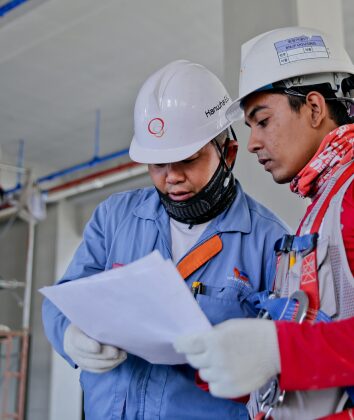
Construction sector – €4.5B revenue | 15,000 employees
Our client accelerated its growth through numerous acquisitions without aligning its Finance processes and the organization of its highly decentralized Finance department. Althéa was engaged to work on the 4 analysis areas:
- The target organization of the Finance department
- Modernization and alignment of business processes
- Building a data-centric IS architecture
- The contribution of AI/RPA to increase process efficiency
And, of course, the associated business cases depending on the scenarios in the evolution plan.
Assignment dates: January 2023 to June 2023
Team: 1 senior manager, 1 manager, and 1 consultant
Effort: 45 person-days
For a French audiovisual company
Media sector – €380M revenue | 150 employees
Our client sought support for its Finance IS redesign project, based on the SAP ECC6 solution, whose scope covered almost all functional areas of the Finance department. Althéa was selected to deliver a Finance IS master plan to build a 3-year roadmap with the various project priorities and associated business cases.
Assignment dates: October 2023 to February 2024
Team: 1 senior manager and 1 manager
Effort: 25 person-days
Challenges
An Agile Roadmap
Design an agile roadmap to remain adaptable in a changing environment and implement a quick wins strategy to make the transformation tangible and visible quickly.
A Transformation Plan
Build a collective transformation plan, supported by all stakeholders. This will help ensure buy-in, anticipate, and secure change management.
Value Analysis
Place value analysis delivered by the transformation at the heart of the approach and ensure it is managed over time.
Contacts

Your questions about the Finance Master Plan
What role should the CFO play in transforming the Finance function?
The CFO holds a pivotal position in the company’s financial transformation, as a strategic partner to executive management. This transformation requires finding the right balance between traditional financial expertise and the adoption of innovative new technologies.
As the transformation lead, the CFO must effectively steer the transformation program by defining a clear roadmap. While optimizing financial processes, they must ensure stability and control of established processes, which are essential to the company’s strong financial governance during the migration period.
Please note: implementing new technologies such as artificial intelligence and automation requires strong involvement from the CFO. They must ensure that these tools enable real-time processing of financial data while guaranteeing its reliability, in line with internal control standards. Their expertise is crucial to identify the highest value-added tasks that should be preserved and further developed.
This transformation requires the CFO to act as a balancing force, able to drive the innovation needed to increase operational efficiency and the quality of the indicators produced, while maintaining the rigor and stability of the essential processes embedded in the company. Their ability to communicate this balanced vision and mobilize employees around the project is a key success factor.
How can change management be handled with traditional finance teams?
Change management with traditional Finance teams requires a structured approach that takes into account concerns and natural resistance to new financial processes.
The first step is to create a clear vision of the benefits of the transformation, emphasizing the added value for each employee. The objective is to demonstrate how automating repetitive tasks saves time, allowing teams to focus on higher-value, more intellectually demanding work.
Support should be based on a comprehensive training program, combining theoretical learning and hands-on practice.
Please note: External consultants and experts play a crucial role in knowledge transfer and adoption of new technologies. Practical workshops enable teams to become familiar with the new tools while maintaining their operational effectiveness.